I undertake the precept to refrain from dancing, singing, music, going to see entertainments, wearing garlands, using perfumes, and beautifying the body with cosmetics.
I undertake the precept to refrain from sitting or lying on high and luxurious seats and beds.
12)Micchājīvā veramaṇī‧sikkhāpadaṃ samādiyāmi I undertake the Precept to refrain from wrong means of livelihood
13)Yāvajivam aham ratanattayam na niggahissāmi tatheva tam samādarena garukaram karissāmiti sikkhāpadaṃ samādiyāmi. I undertake the Precept not to revile the Three Treasures [the Buddha, Dhamma and Sangha] but to cherish and uphold them.
14)Karunupāya kosalla pariggahitānam dasapāraminam paripurana sikkhāpadaṃ samādiyāmi I undertake the Precept to practise the Ten Perfections with compassion and skill.
Imāni cuddasa sikkhāpadāni samādiyāmi I undertake these fourteen Precepts with full sincerity.
Due to the fact that my marriage is on life support I have been able to commit fully to the eight precepts.
As is my wont, I have decided to increase the number of training rules to undertake in order to make better use of my time and fence in my unruly senses.
For the last twenty or so years, I had truly believed I was practicing the Dhamma: meditating daily, listening to Dhamma talks, attending classes and retreats and trying to practice the Precepts. But, as you may have noticed from the ordering of the preceding, I now suspect that my view of practice has been upside down the entire time.
Like many people I know, my introduction to Buddhism came through meditation. My first real experience with a state of calm that would propel me further into the practice was after reading Kapleau Roshi’s The Five Pillars of Zen (zen itself being the Japanese rendering of dhyana/jhana referring to states of rarified concentration). At this time I did begin to practice the precepts in earnest but the order was always inverted and when I later heard phrases such as “secluded from sensuality” I assumed that this was a temporary requirement.
As the years passed, I found myself more and more attracted to austere practices and often observed the uposatha but was nonetheless completely devoted to sensuality. In truth, I still am. Only very recently have I begun to see that, for any real progress to be made, it is necessary to directly confront my craving for sensuality not as a corollary to the practice but as the practice itself. I owe this (a la Kant) Copernican revolution to Ajahn Nyanamoli Thero and cannot recommend his teaching enough. Yes, they are difficult to hear, especially for those of us who have meticulously cunted our breaths and slowly paced up and down for decades but, if we truly wish to be liberated, we cannot afford to be complacent.
I am not yet at the point where I am able to live a life devoted to the 8 Precepts but I at least know that a handful of concentration exercises and a cursory understanding of the Dhamma does not a Buddhist make. It has been hard to realize that the Dhamma truly goes against the stream of the world and that I really cannot have my cake and eat it too.
“When both are faithful and bountiful, disciplined, living righteously, then wife and husband say nice things to each other.
They get all the things they need, so they live at ease. Their enemies are downhearted, when both are equal in ethics.
Having practiced the teaching here, both equal in precepts and observances, they delight in the heavenly realm, enjoying all the pleasures they desire.”
Paṭhamasamajīvīsutta—Bhikkhu Sujato
As I sit here in the small room I’ve rented during our separation it is hard to imagine that the scenario described by Lord Buddha above could actually exist. I have found myself too weak to give up on my children and part of that means doing all I can to salvage my marriage.
Being watchful of your actions throughout the day means that your mind is staying with that which is the priority: namely, ‘the guarding of the gateway’ of your mind, so that there are no obstructions for it. That’s the sole task—which can be outlined through discipline, guarding the senses and moderating your eating. You will end up just having to guard the entrance of the gateway, so you don’t have to be running around. The gateway is that one entrance into the city which is walled all round, and that ‘wall’ is your discipline and sense restraint. That’s why virtue and celibacy are not optional if you want to practice rightly.
Also, it is essential to note that the development of mettā does not result in having love for all: it leads to the development of upekkhā, or equanimity, which is the ability to maintain an unshakable mind toward all things without attachments.
I listened to this Dhamma talk last night and it really struck a deep chord of fear inside. I have faith in the teachings of Lord Buddha and take his descriptions of the apaya loka at face value so why have I not been living in accord with the truth?
Clearly, I have some concerns if a cord was struck but, in all honesty, how can we not? Who among us had not killed a being, told a white lie, taken some toothpaste without asking? And, I know that I have broken the third and fifth precepts in my past more than once. What if these things arise for me at the moment of death?
I asked a bhikkhu friend of mine if he wouldn’t mind writing a piece on the hell realms but he said he didn’t like being the fire and brimstone preacher monk. And I get it, but it does seem to me that there is a concerted cultural effort to deny rebirth and anything resembling a teaching that there are hell realms.
It’s scary to imagine for oneself and it is equally distressing to think that our loved ones may be headed there without ever suspecting that to be the case.
How to Avoid Rebirth in Hell
I remember that I once had the opportunity to ask Thanissaro Bhikkhu about this and brought up the Mahanama Sutta, specifically where the Lord Buddha says:
“Suppose a tree were leaning toward the east, slanting toward the east, inclining toward the east. When its root is cut, which way would it fall?”
“In whichever way it was leaning, slanting, and inclining, lord.”
“In the same way, Mahanama, a disciple of the noble ones, when endowed with four qualities, leans toward Unbinding, slants toward Unbinding, inclines toward Unbinding.”
I pointed to this to infer that we devoted lay practitioners should be okay, provided we are inclined to the Dhamma but then he dropped a bomb: Mahanama was a stream enterer.
So, there’s no assurances unfortunately for those of us living in the real world but it is clear that the best we can do is to follow the precepts, practice generosity and meditate. Who knows what lies in store for us but whatever work we can do know will certainly put us in better stead.
Here’s a new rule to help keep myself from making bad decisions when my mind is otherwise clouded by delusion or inflamed by lust or anger: only do those things that you feel no remorse at all about.
I have never once felt that I would regret giving. I have never once felt that I would be ashamed for having bitten my tongue. I have, however, felt a pang of regret for having broken my fast, for having given in to a desire, for having given the last word.
Life is so short and we pave our way to our next destination with the quality of our thoughts, words and deeds. Frankly, I don’t want to roll the dice and take my chances with questionable kamma. I want to ensure I create the best possible conditions for practice for tomorrow and beyond.
And, even if you don’t have the saddhā to take up this Buddhist Pascal’s wager, anyone with a modicum of awareness of their own internal life can see how uncomfortable it is to live with remorse and regret.
“Some animals have vassana, parami and a better character than some human beings. It is just that they happened to be reborn as an animal in this life, therefore they have to accept and endure the consequences of their kamma. We should not underestimate and look down on them as beings of a lower birth. They are simply receiving the consequences of certain kammic actions.”
Luang Pu Mun Bhuridatta
Accept and Endure
As frightening as this possibility is, anyone who takes the Lord Buddha at his word, knows rebirth in an animal womb is just one of the many possible outcomes in samsara. And, per the Dhamma, we know that this is the result of our own actions, it is the fruit of our kamma.
But, as Luang Pu points out, all is not lost provided we bear our lot with equanimity. We are the heirs of our kamma and it does us no good to lament and gnash our teeth at what we perceive is a cruel and unjust universe. In fact, it may do a lot of harm, if we don’t (to borrow Nietzsche’s term) learn to cultivate some amor fati and make the best of our situations.
Ataraxia and Upekkha
How we do that, however, is no easy task. In both Buddhist and Stoic thought there exists the concept of equanimity or imperturbability. In Hellenistic though this is termed ataraxia and in the Pali Canon as upekkha. These two conceptual constellations are quite similar but it must be said that a subtle difference does exist. It could be said that ataraxia is simply the state of imperturbability whereas upekkha is flavored by its sister concepts or states metta, karuna and mudita. Despite this difference of nuance, however, it is not so different in practice for those of us who are not yet arahants or Σοφοί (sophoi).
The point here is that, without putting too fine a point on it, we need to learn to cultivate a steady and even nature in the face of suffering and calamity whether it is befalling us or others. The next question is, of course, how we go about doing that.
How to Cultivate Ataraxia
The way we answer this question really depends on which philosophical perspective we take up. In other words,
“a crucial difference between ataraxia and apatheia is that ataraxia was an end goal for the Epicureans but not for the Stoics. The Stoics acknowledge this term, but prefer apatheia to describe a mindstate similar to ataraxia. In Stoicism, both ataraxia and apatheia are seen as a byproduct of virtue.”
Here are some ideas about how we might begin to practice ataraxia or apatheia in our daily life (and tehy come from a fellow Buddhist blogger):
There are things we can do to encourage ataraxia in ourselves:
Do what we do as best we can. Prepare what is in our control and don’t worry about what isn’t.
Fully inhabit the present, not fearing the future or ruminating on the past.
Practice simplicity. Seek tranquility (not thrills).
Virtuous behavior, integrity; also, be generous in all situations.
Avoid excessive grief. Grieve our losses but appreciate what we had.
How to Cultivate Upekkha
Upekkhā is equanimity. The commentary likens this to the mood of a parent seeing that the child is now fully grown and can move around on its own. Then the parent senses: ‘He or she will find out what they need to find out. I still care for them, but now they can discover things for themselves.’ Upekkhā carries trust: it’s accompanied by the understanding that we all have to work with our own impulses, habits and attitudes. In this process, equanimity sustains the empathy that keeps the heart open and allows us to grow, rather than be perfect from day one. Or perfect at all: with empathy we begin to sense that ‘perfection’ is a form of ill-will. If you look for perfection, what you find is the critical and discontented mind. Instead of setting up an ideal, equanimity trusts that we can be who we are and go through what we need to in order to grow. Equanimity doesn’t sound that emotionally rich, but it is a very generous form of love. We all have to be with our fears and joys, our success and failure, our good and bad, and equanimity allows us to be present with the results of our actions so that we can acknowledge and investigate them. With equanimity we know what is good as just ‘that leads to a good place’ rather than ‘I am right.’ And what was unskilful can be known as ‘ that was unskilful’ rather than being agonized over. So we learn and see things in a way that doesn’t attach a big ‘I am’ to them. This is transformative.
Upekkhā is not indifference. So when one is going through a tough time, or seeing others struggling, rather than panicking or self-pitying or collapsing, equanimity maintains confidence in being empathically present. We this trust mindful presence of heart to have its effects. With some stuff, you just don’t know what to do; all you can do is be present with it, and just not keep adding more to it. This is upekkhā, to others as to oneself.
Clearly, cultivating an attitude of equanimity in the face of calamity is good for oneself in that it allows you to take stock of your situation and act appropriately to get the best outcome you can manage. But, and this is a point I have only recently stumbled upon it is also good for others. More precisely, the perception of you being impassive and not quick to overreact to bad news or terrible situations makes you a safe place and a refuge to people who generally depend on you. If you are known to be someone who gets very upset when they hear bad news people will quite naturally try to shield you from it. In this way, especially in the case of children, our lack of stability and evenness can result in those in our care being indirectly hurt since they don’t feel they can come to us with their problems. If your teenager has an issue with their health but they’re afraid to tell you about it because of past reactions, what do you think might happen? If your six year old has been bullied or worse at school and they don’t tell you, what will be the result?
In short, whatever you call it, equanimity is one of those qualities that are always apropos. Whether you take it as the end of your practice as do the Epicureans, a preferred yet indifferent side effect of the pursuit of virtue as the Stoics or as a prosocial subject of meditation and an unconditioned, boundless state (appamañña vihara), rest assured that it is well worth your effort. Even if we never ascend to the heights of perfect equanimity we would do well at least begin to fake it.
Whether we’re born as a dog or a deva, we need to be able to cultivate the patience leading to equanimity. If we’re able to practice generosity, virtue and meditation the path to upekkha becomes much clearer but, even if we’re not, we need to take steps to become less apt to be disturbed and thrown off balance.
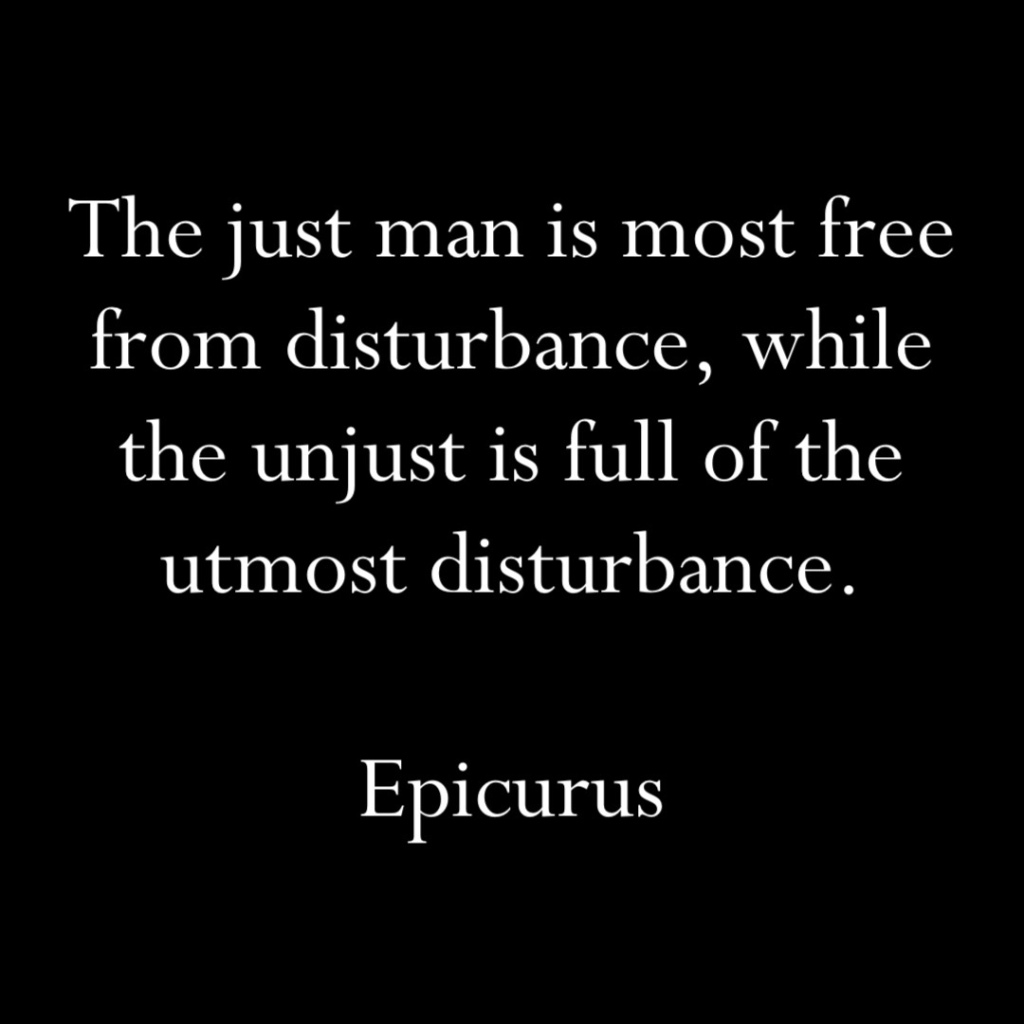
Speaking with my son on the way back home on the train, I had occasion to share the quote above. I had often seen it quoted but had never felt the need to ponder it more deeply or share it. At that moment, however, it seemed particularly apt.
Aside from the forms of dukkha explicitly mentioned in the Dhammacakkapavattana Sutta, there are also three more derivative categories of suffering:
Dukkha-dukkha, aversion to physical suffering – this includes the physical and mental sufferings of birth, aging, illness, dying; distress due to what is not desirable.
Viparinama-dukkha, the frustration of disappearing happiness – this is the duḥkha of pleasant or happy experiences changing to unpleasant when the causes and conditions that produced the pleasant experiences cease.
Sankhara-dukkha, the unsatisfactoriness of changing and impermanent “things” – the incapability of conditioned things to give us lasting happiness. This includes “a basic unsatisfactoriness pervading all existence, all forms of life, because all forms of life are changing, impermanent and without any inner core or substance.”[28] On this level, the term indicates a lack of lasting satisfaction, or a sense that things never measure up to our expectations or standards.
I suppose that anxiety and worry are viparinama-dukkha although I never really took the time to clarify that for myself.
Strange, now that I think about it not to have done so. I suppose I really only ever thought of restless and remorse as a part of the five hindrances and didn’t get too concerned with the their nature as dukkha.
I think there is a lot more to flesh out here but it is obvious that, for Seneca at least, there is no further escape from suffering. No Nibbana for the Stoic Sage unfortunately.
As a post script, I thought I would include this Sutta which I came across during this morning’s Dhamma study. Very unexpected but incredibly apropos: https://suttacentral.net/sn22.7/en/sujato
Akkocchi mam avadhi mam ajini mam ahasi me
ye ca tam upanayhanti
veram tesam na sammati.
Verse 3: “He abused me, he ill-treated me, he got the better of me, he stole my belongings;”… the enmity of those harbouring such thoughts cannot be appeased.
I input this verse into an AI image generator and got some pretty interesting results. I believe I’ll continue doing so until we reach the end of the Dhammapada.
I also intend to keep coming back to each verse and adding resources as I find them.
Below you’ll find the text with commentary about the the monk Tissa who served as the impetus for verses 3 and 4.






 Cattāri Brahmavihārā